
Off-Grid Class Q Barn Conversion in Devon
How to Power a Class Q Barn Conversion Completely Off-Grid
Can a Class Q barn conversion be fully off-grid?
Yes — and this rural Devon project proves it.
This newly converted Class Q barn faced a substantial National Grid connection fee of over £6,000, plus ongoing standing charges and rising electricity costs. The retired homeowners wanted complete energy independence, predictable running costs, and the ability to power modern appliances without compromising the rural setting.
Offgrid Western designed and installed a fully off-grid solar and battery system capable of powering the property year-round — including some smart electric hot water heating during winter.
- Roof Mounted array
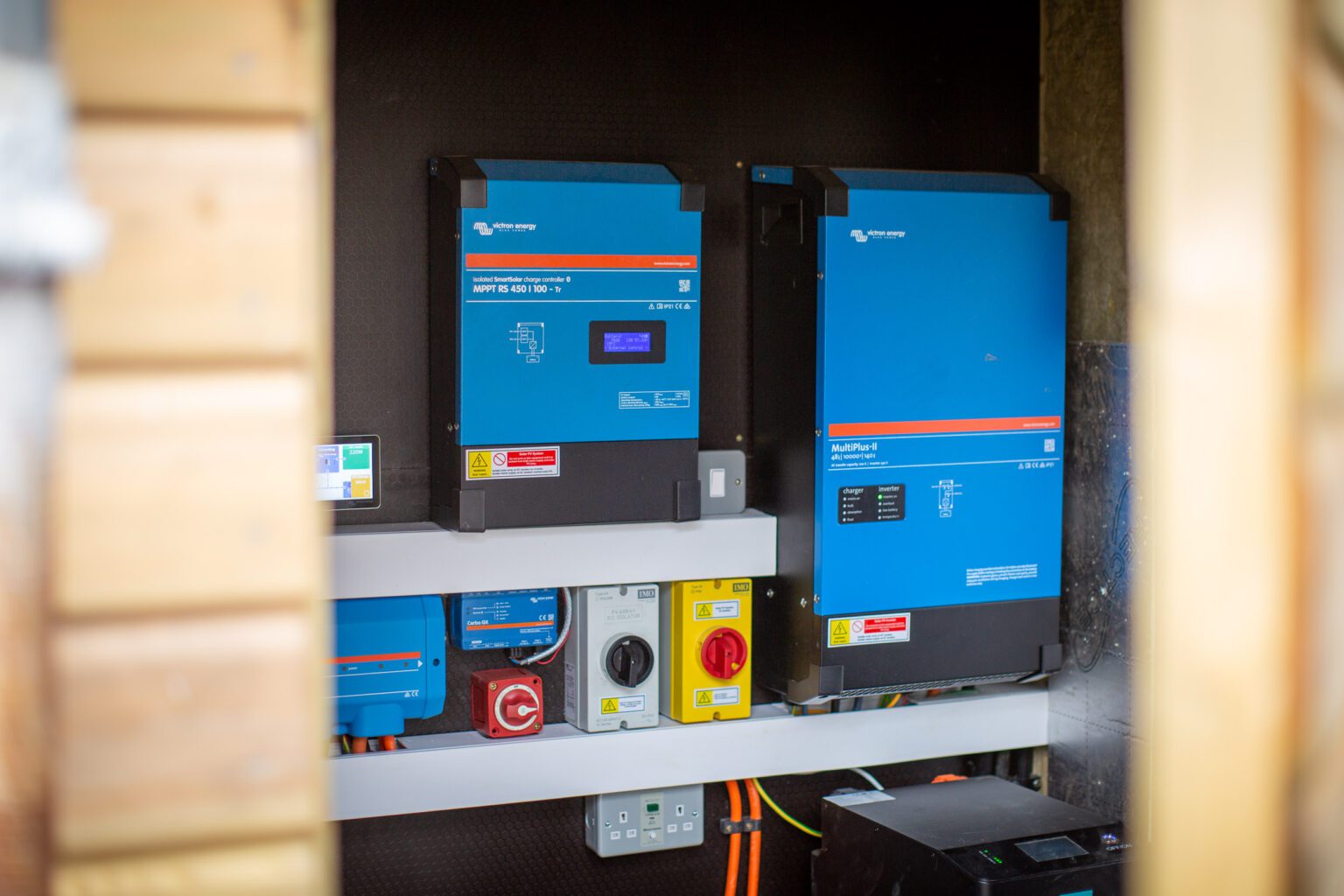
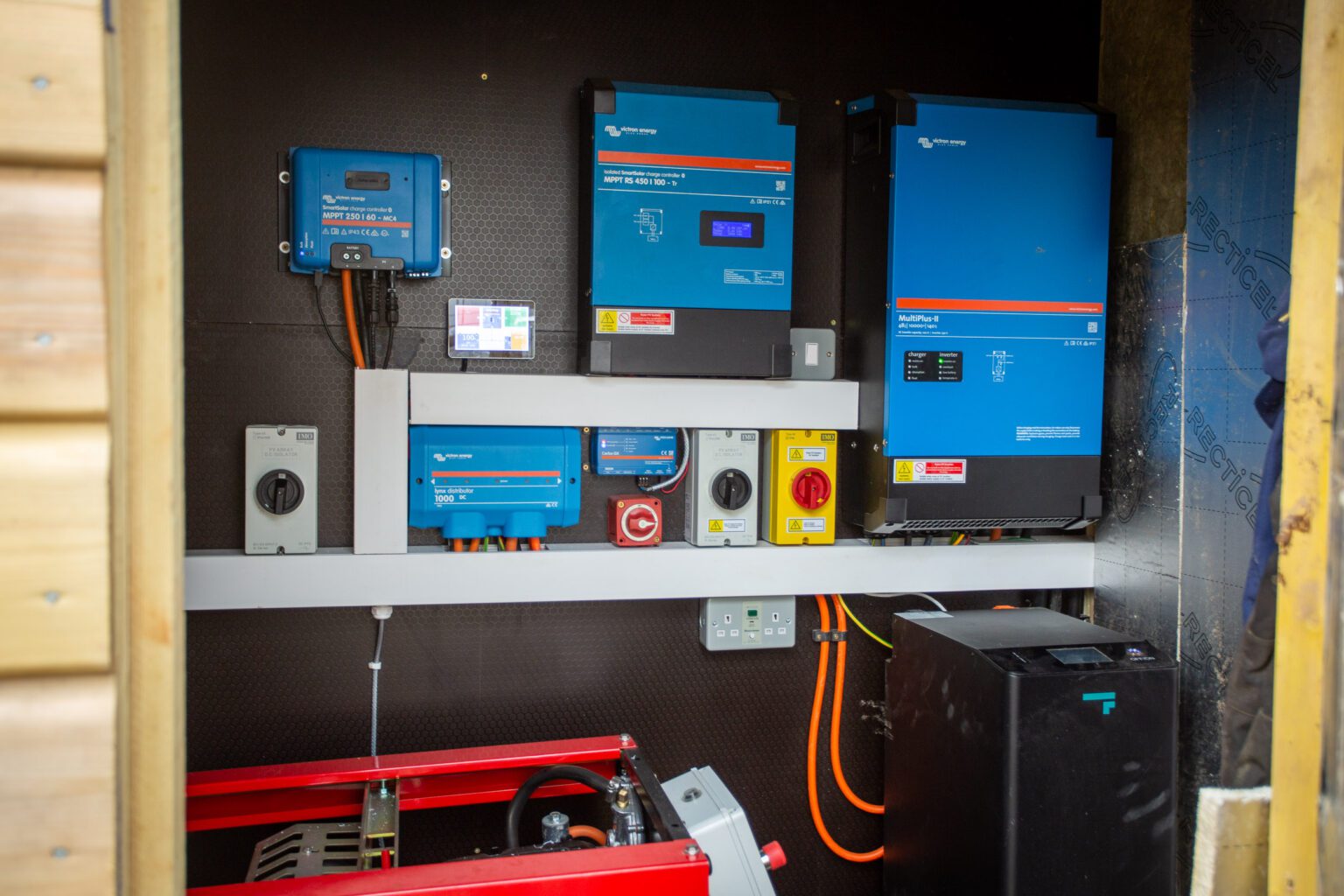
- Victron Off-Grid System
- Self Sufficient
- Backup Generator

Tom Cosgrove-Chubb
Renewable Energy Systems Designer | Solar, Battery & Off-Grid Specialist
A Self-Sufficient Barn Conversion
Offgrid Western was commissioned to design and install a renewable energy system to power this newly converted Class Q barn conversion in rural Devon entirely without a grid connection.
This self-sufficient Devon barn conversion now operates:
- 100% off-grid
- Zero electricity standing charges
- Minimal LPG generator usage
- Intelligent solar-powered hot water diversion
The result is a resilient, low-maintenance off-grid energy system designed for long-term independence, predictable running costs, and year-round reliability.
The Client Brief
- No visible ground-mounted solar array to preserve the rural setting
- Complete off-grid operation
- Sensible capital investment
- Capacity to run modern appliances, including a dishwasher and electric oven
- Electric hot water heating
- Wood burner for winter space heating
Installed Off-Grid Solar & Battery System
| Solar Array | 9.1 kW DC-coupled roof-mounted PV system |
|---|---|
| Battery Storage | 16.1 kWh Fogstar LiFePO₄ (48V) |
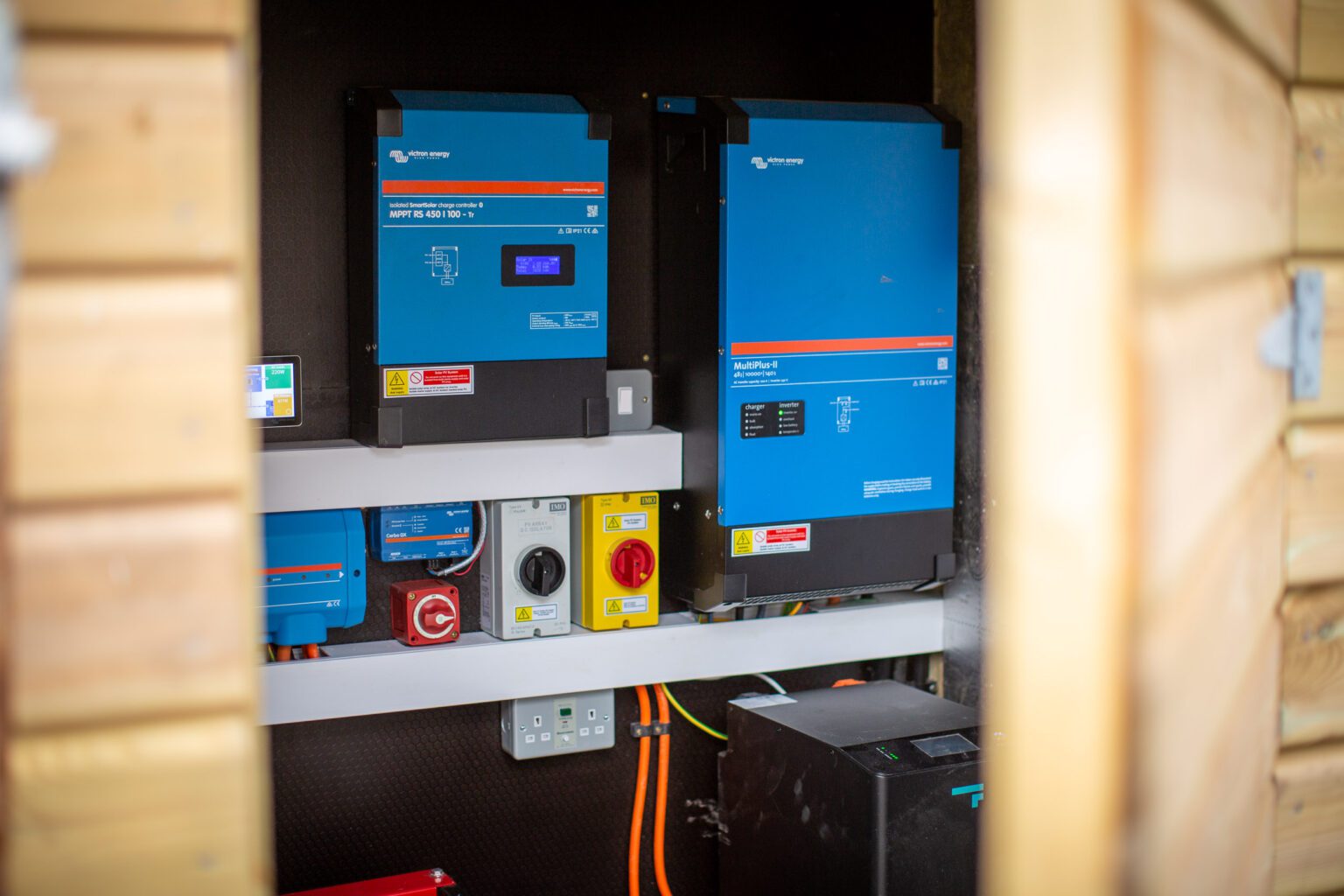
| Inverter / Charger | Victron Multiplus-II 10 kVA |
| Solar Charge Controllers | Victron SmartSolar RS 450/100 + SmartSolar 250/60 MPPT |
| Energy Management | Victron ESS with smart hot water diversion |
| Backup Generation | 10 kVA LPG generator (low annual runtime) |
Designed for high winter resilience, this configuration maximises solar utilisation, protects battery lifespan, and keeps generator usage to an absolute minimum — delivering reliable, year-round off-grid power in rural Devon.
9.1 kW Roof-Mounted Solar Array.
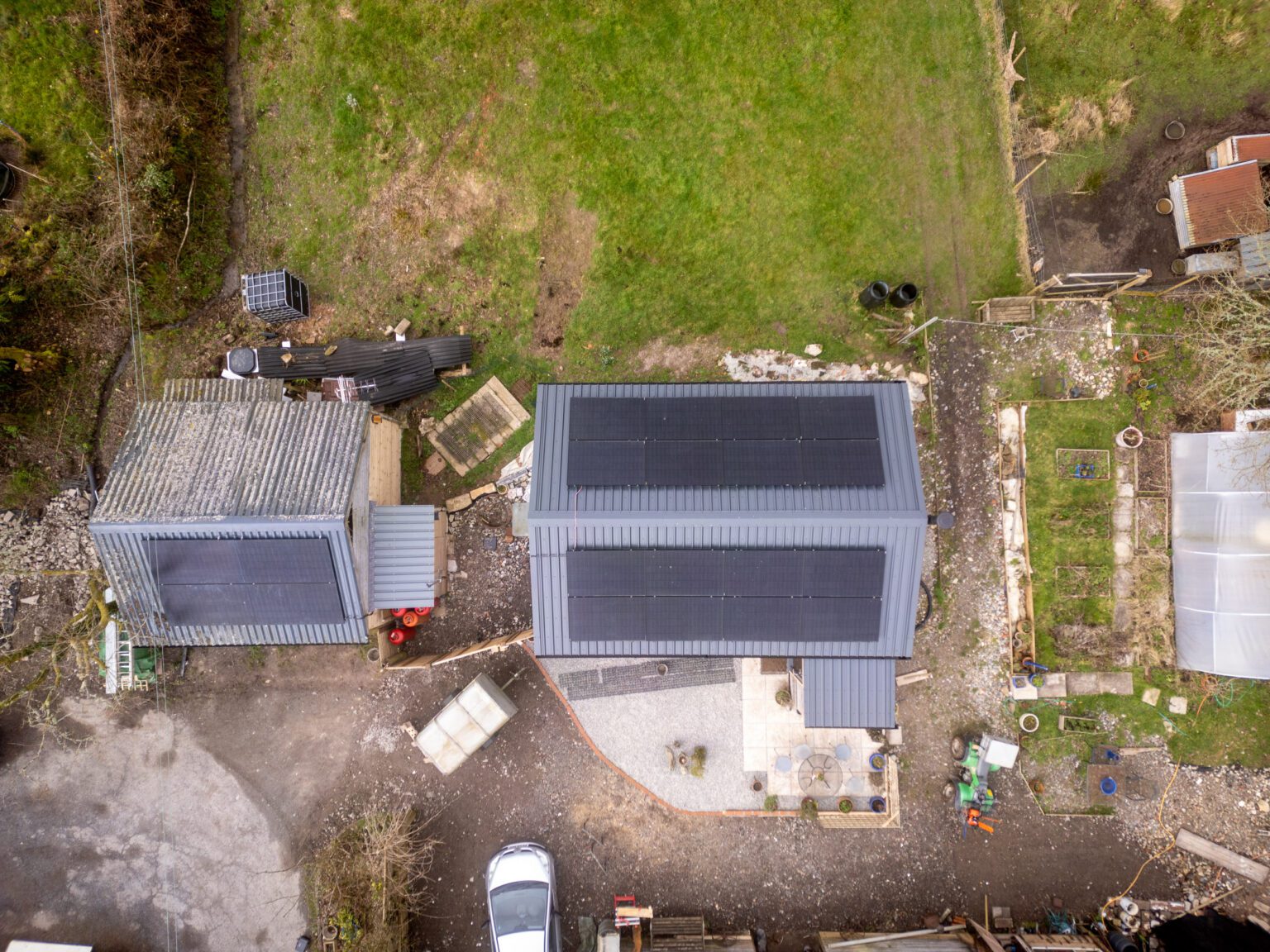
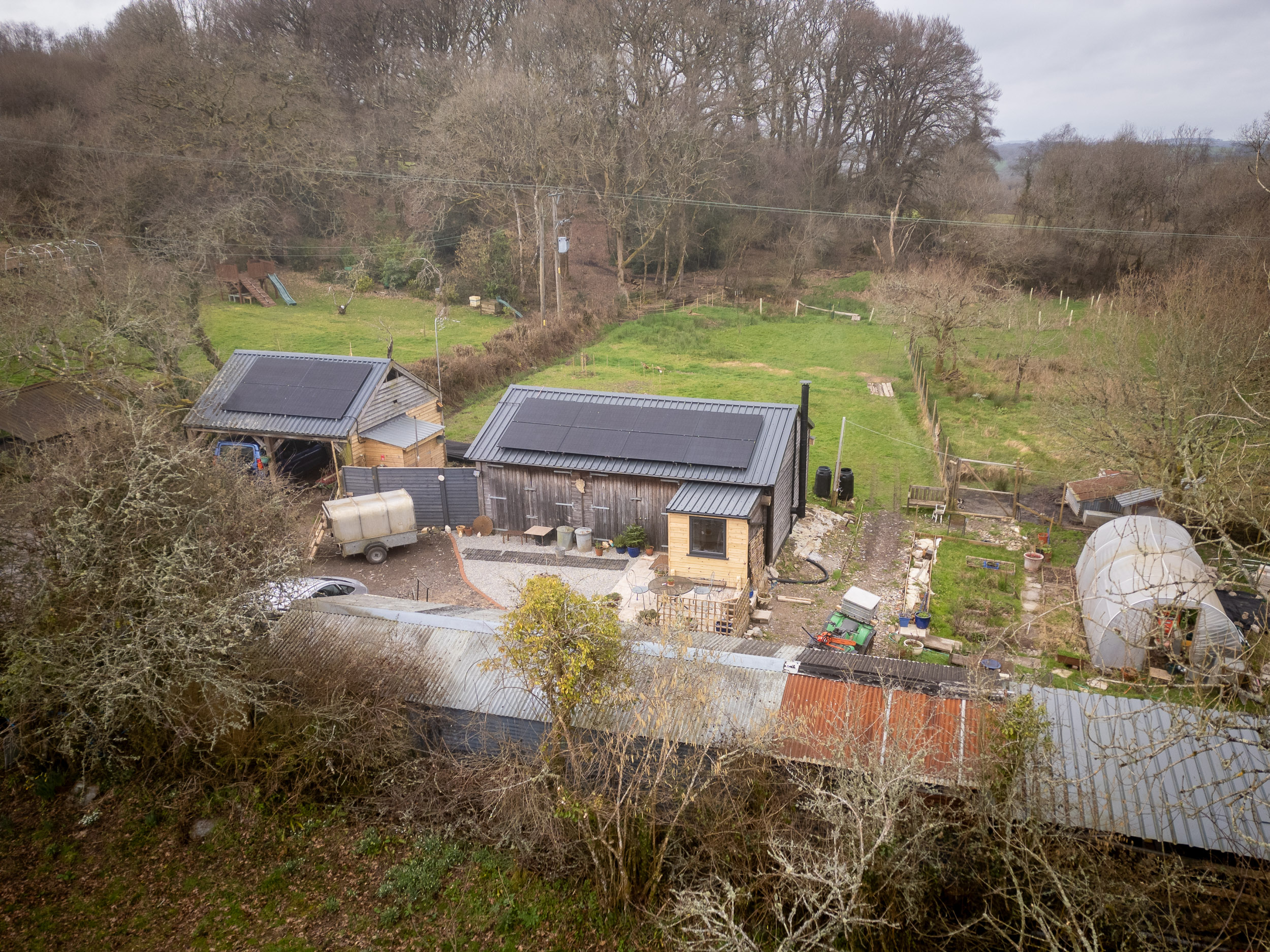
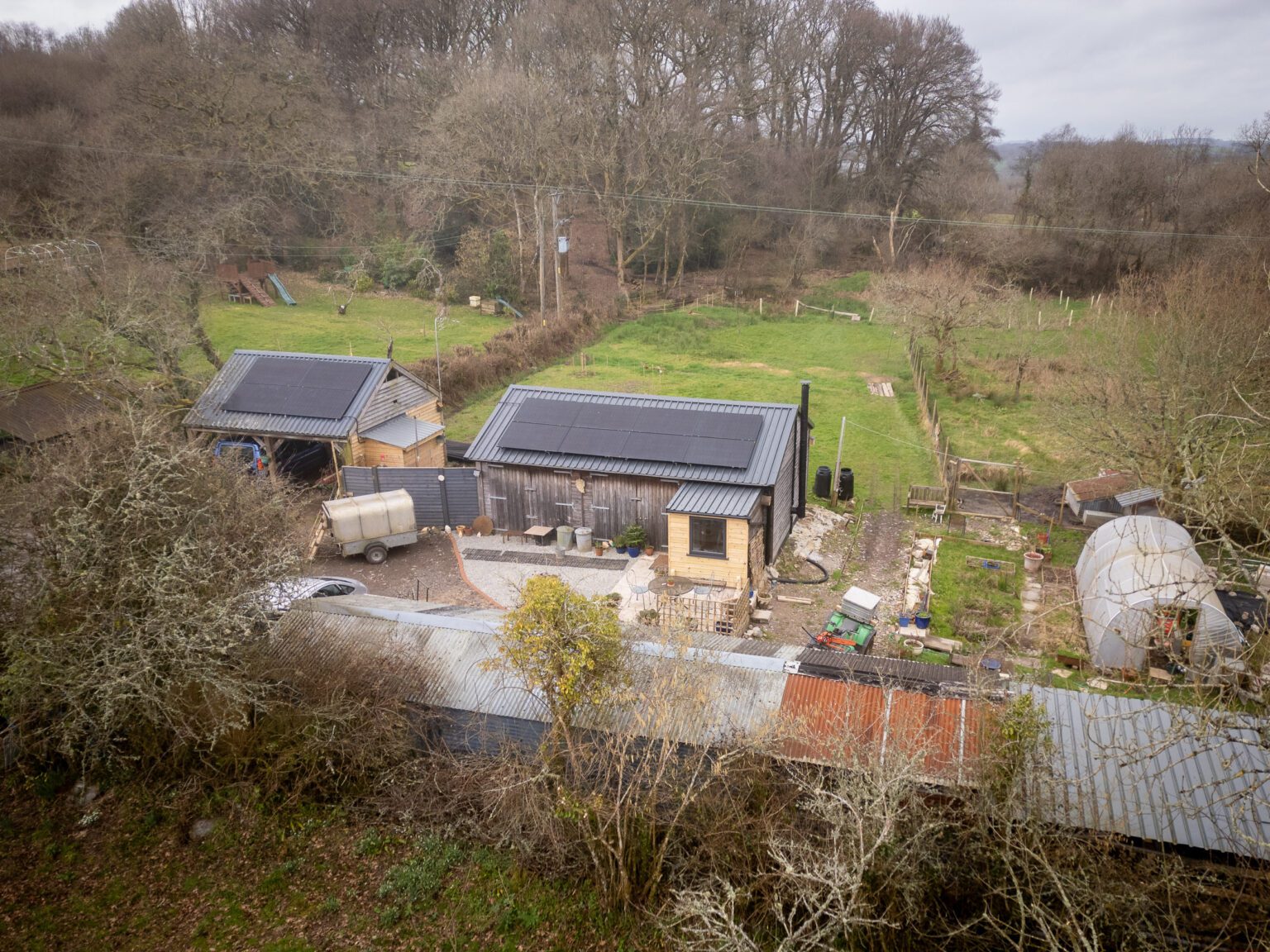
Because ground space was limited and woodland shading was present, the system was designed across:
- One south-facing roof pitches
- One shallow north-facing 8° pitch
- A 45° south-facing carport roof
Each roof pitch runs on its own MPPT tracker to maximise production.
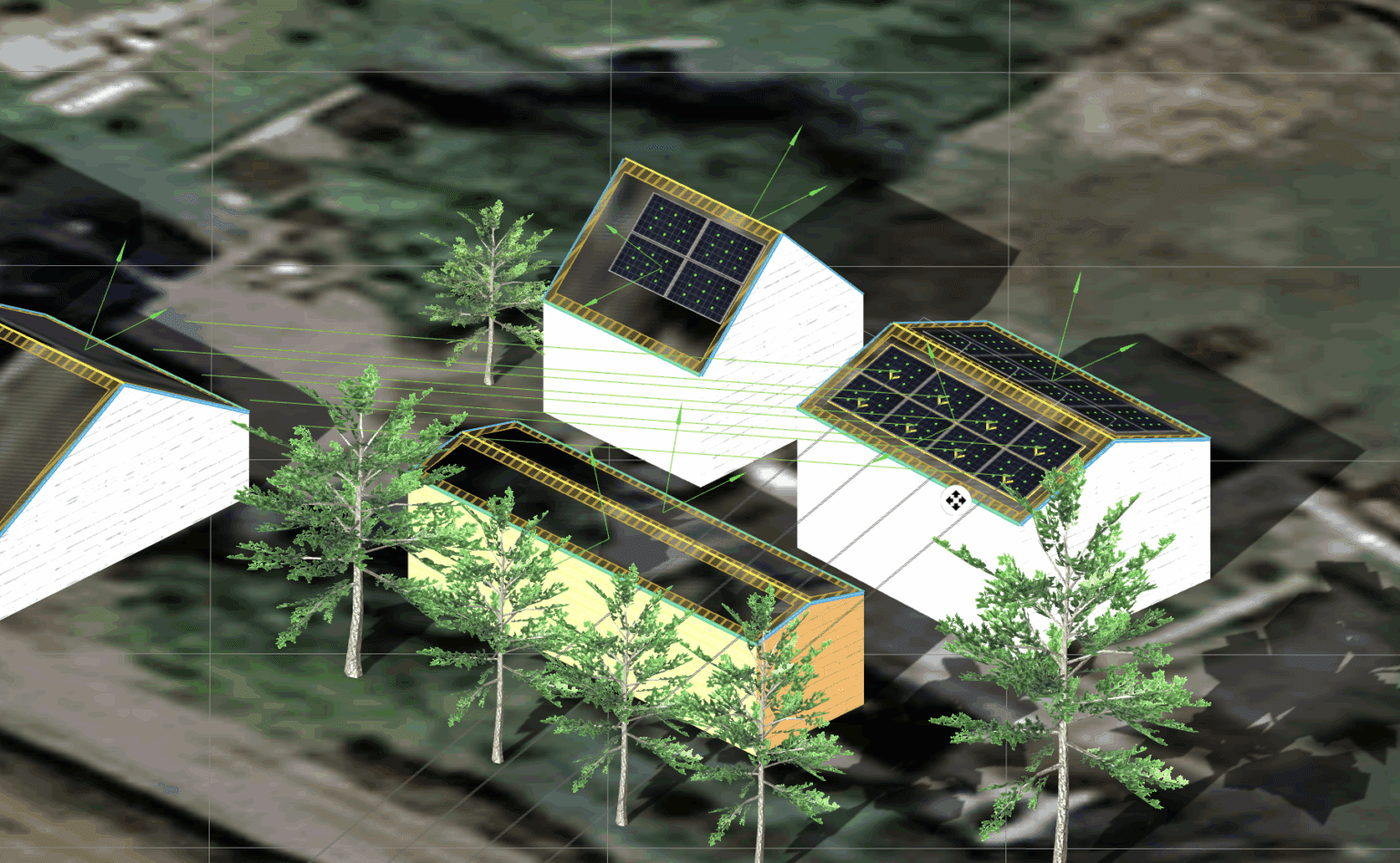
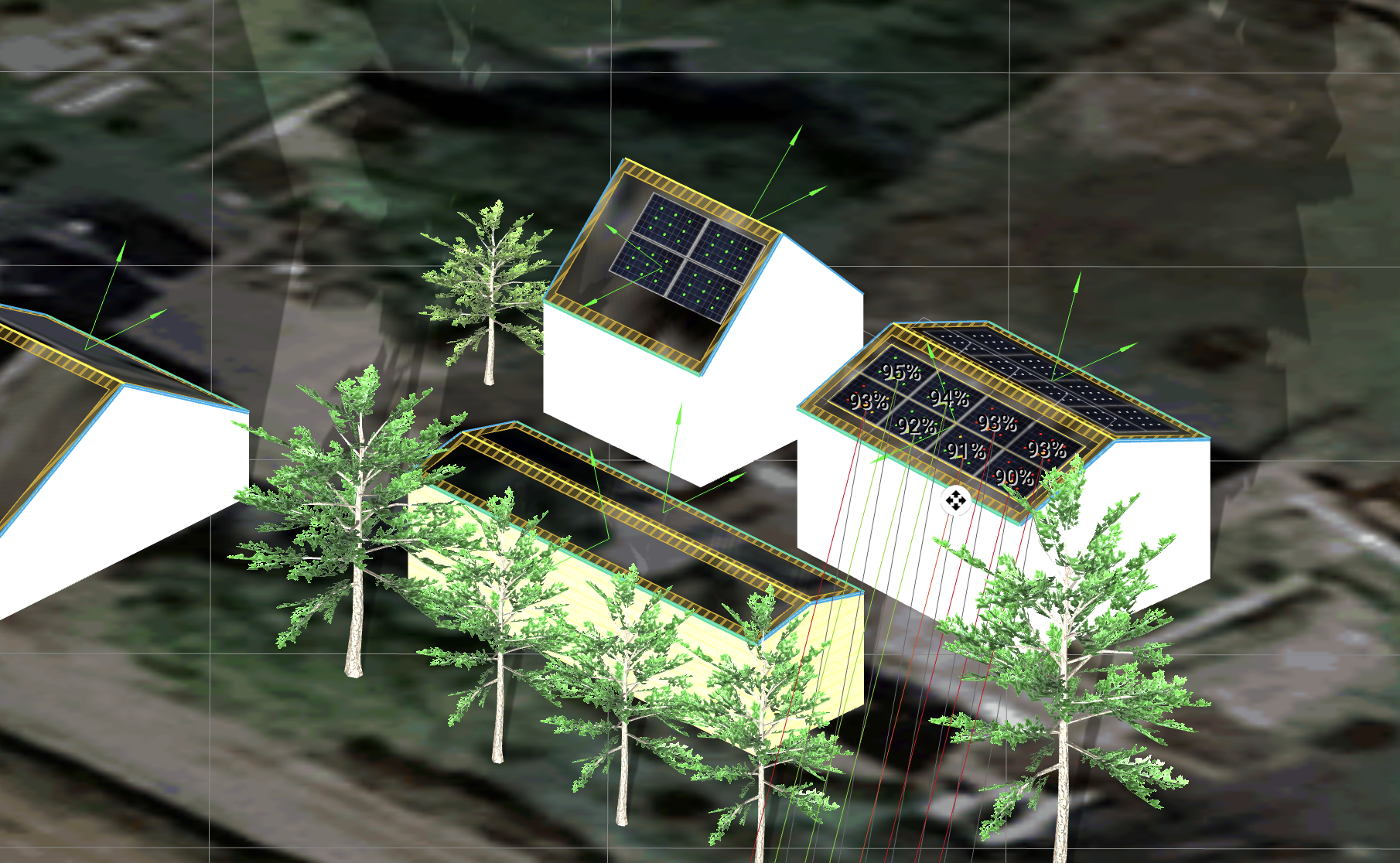
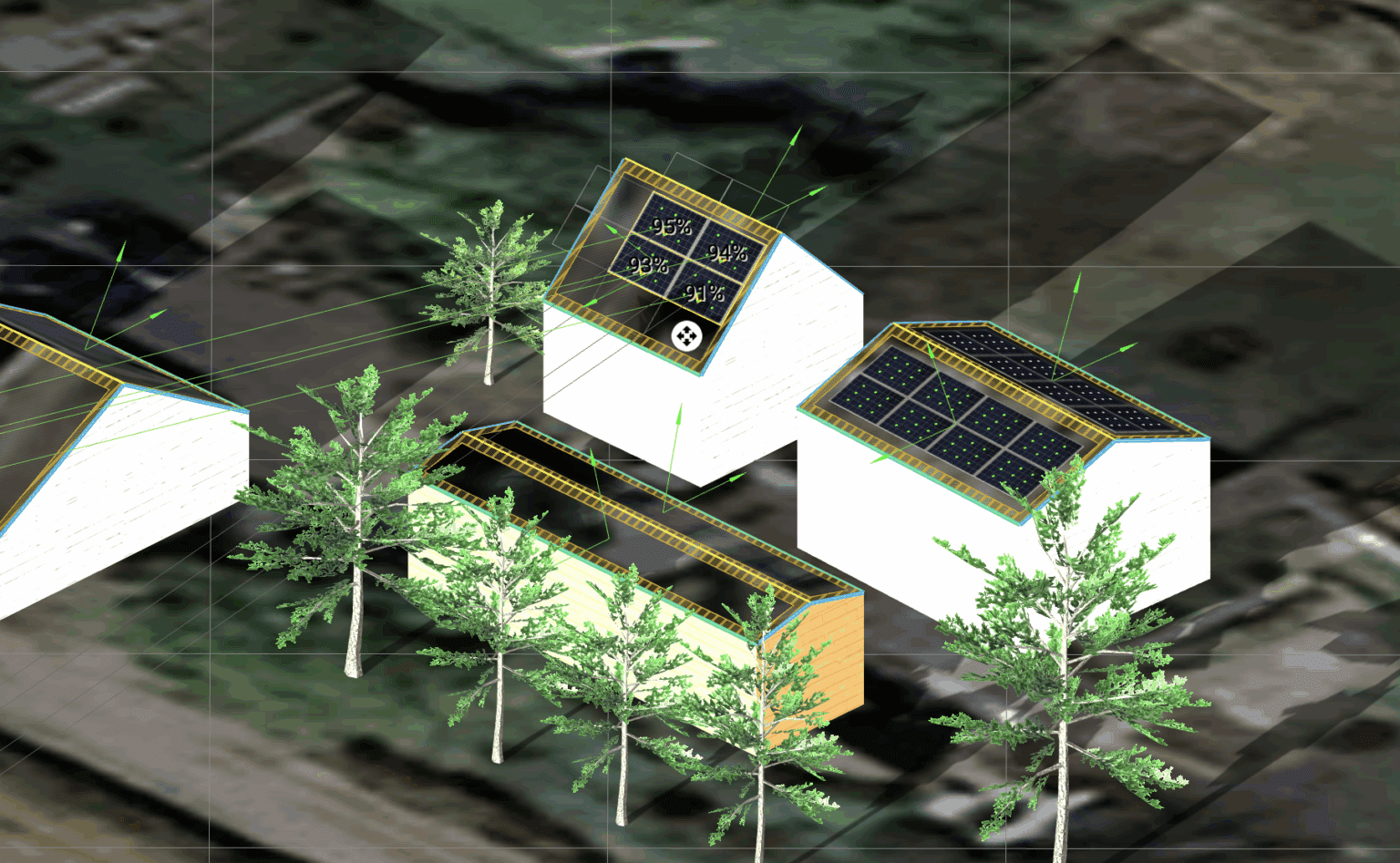
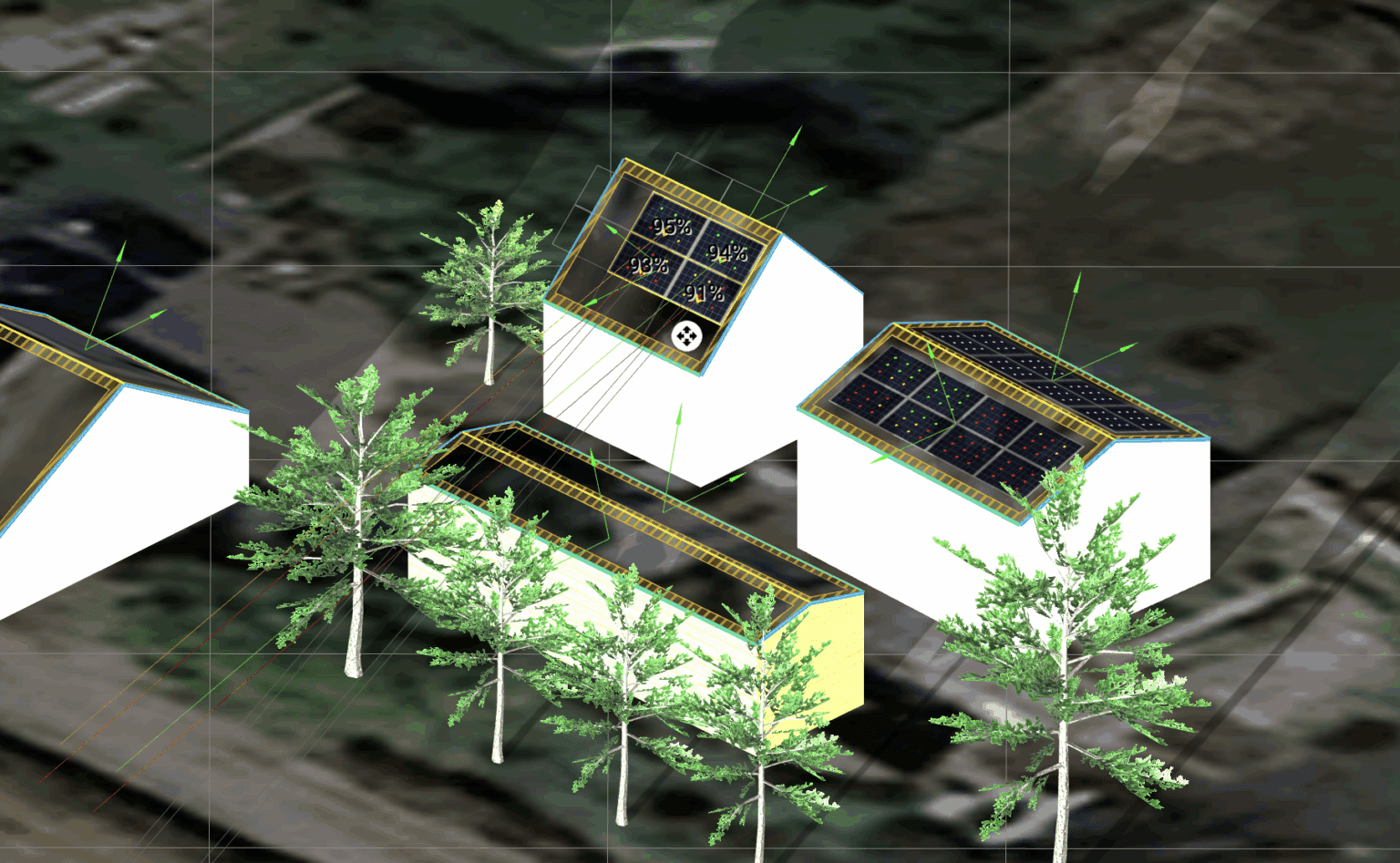
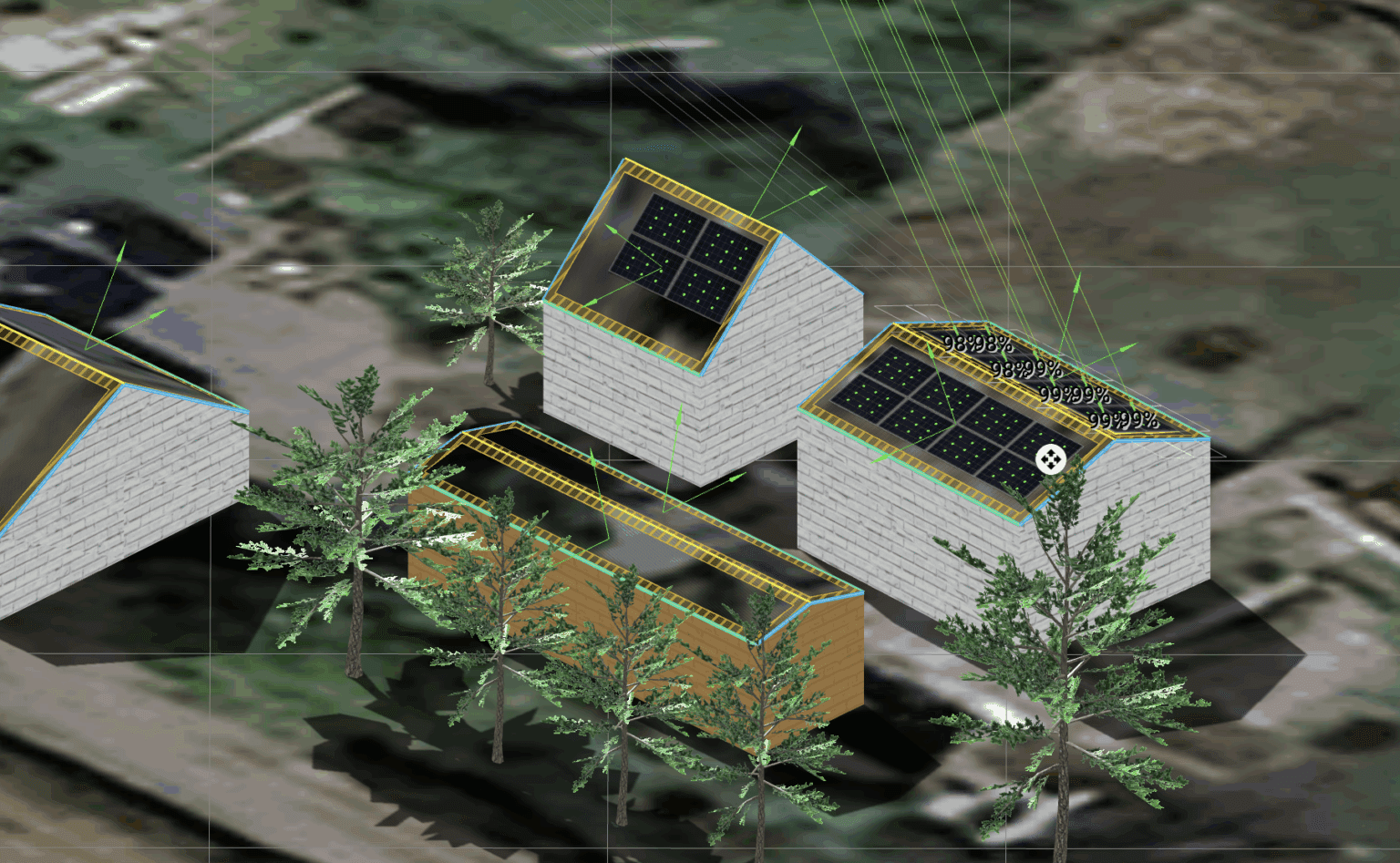
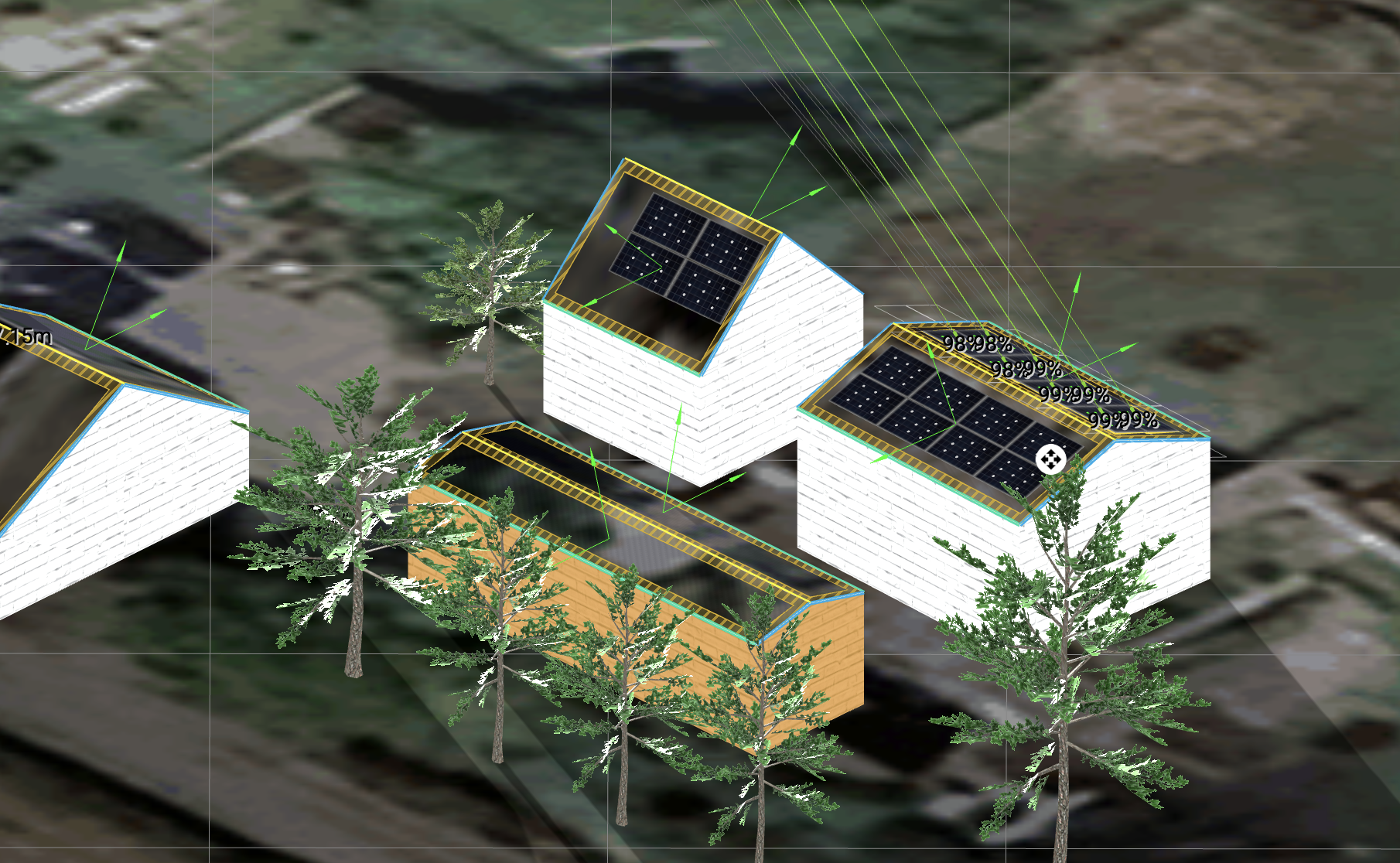
The array was modelled in OpenSolar including shading analysis from surrounding trees.
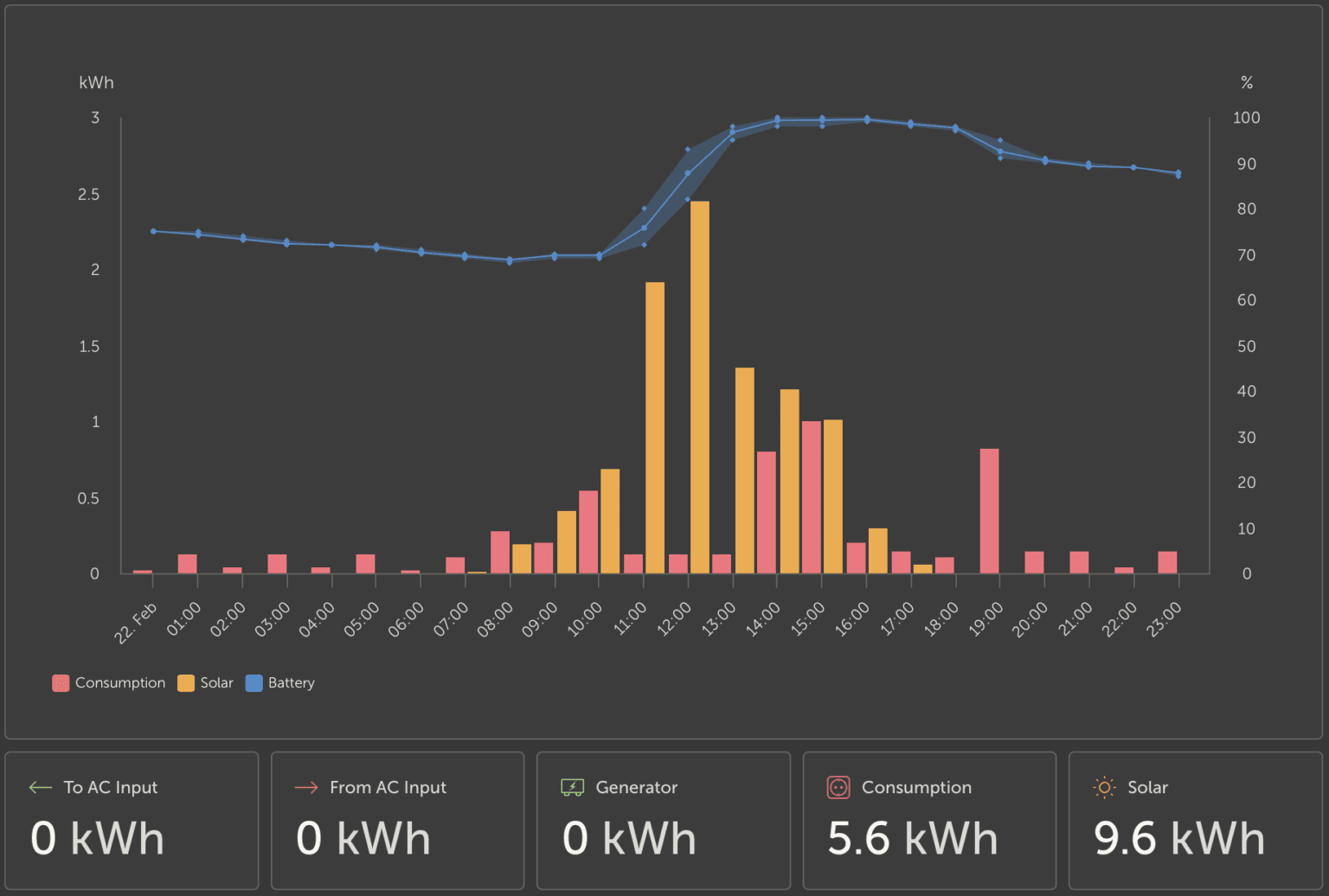
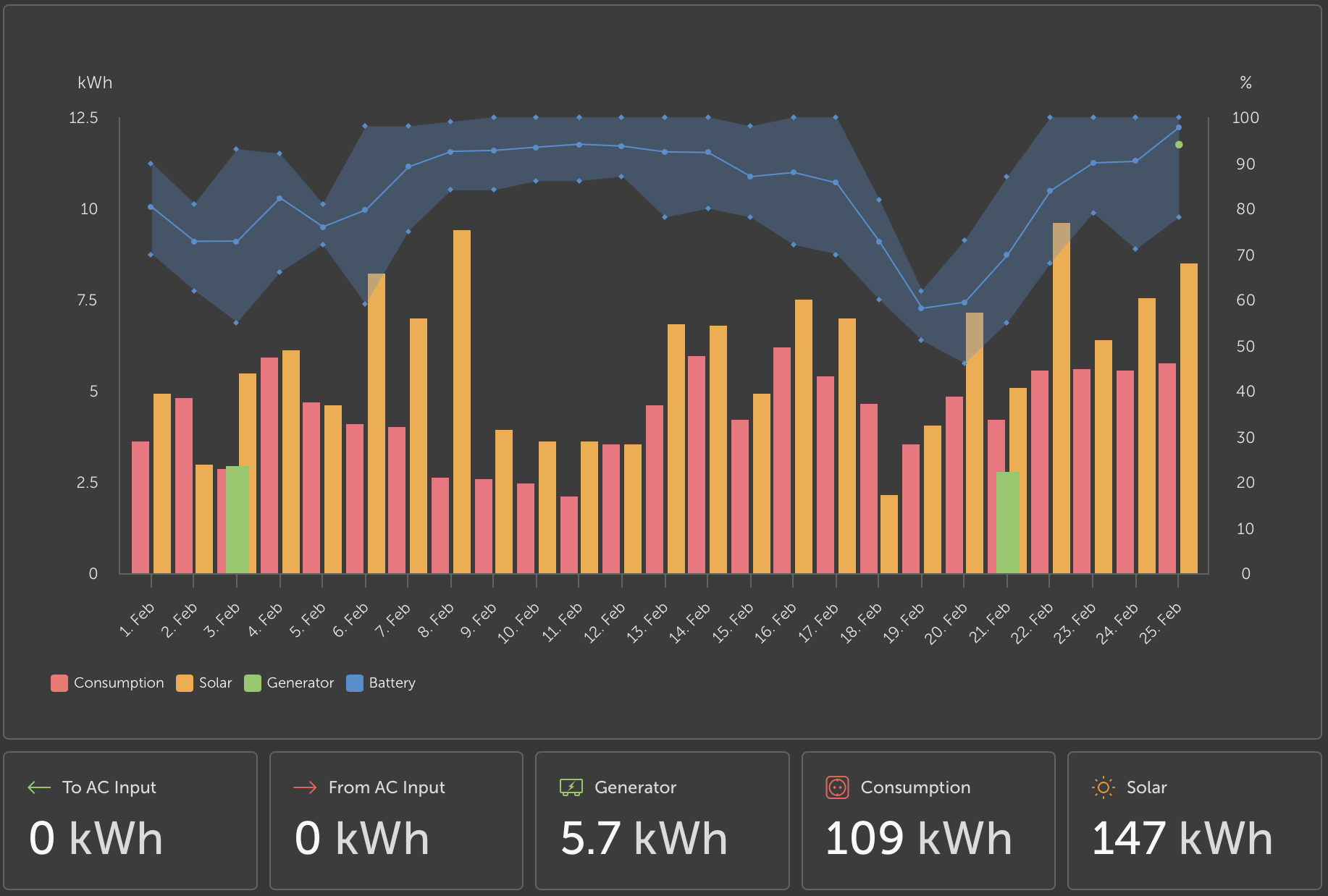
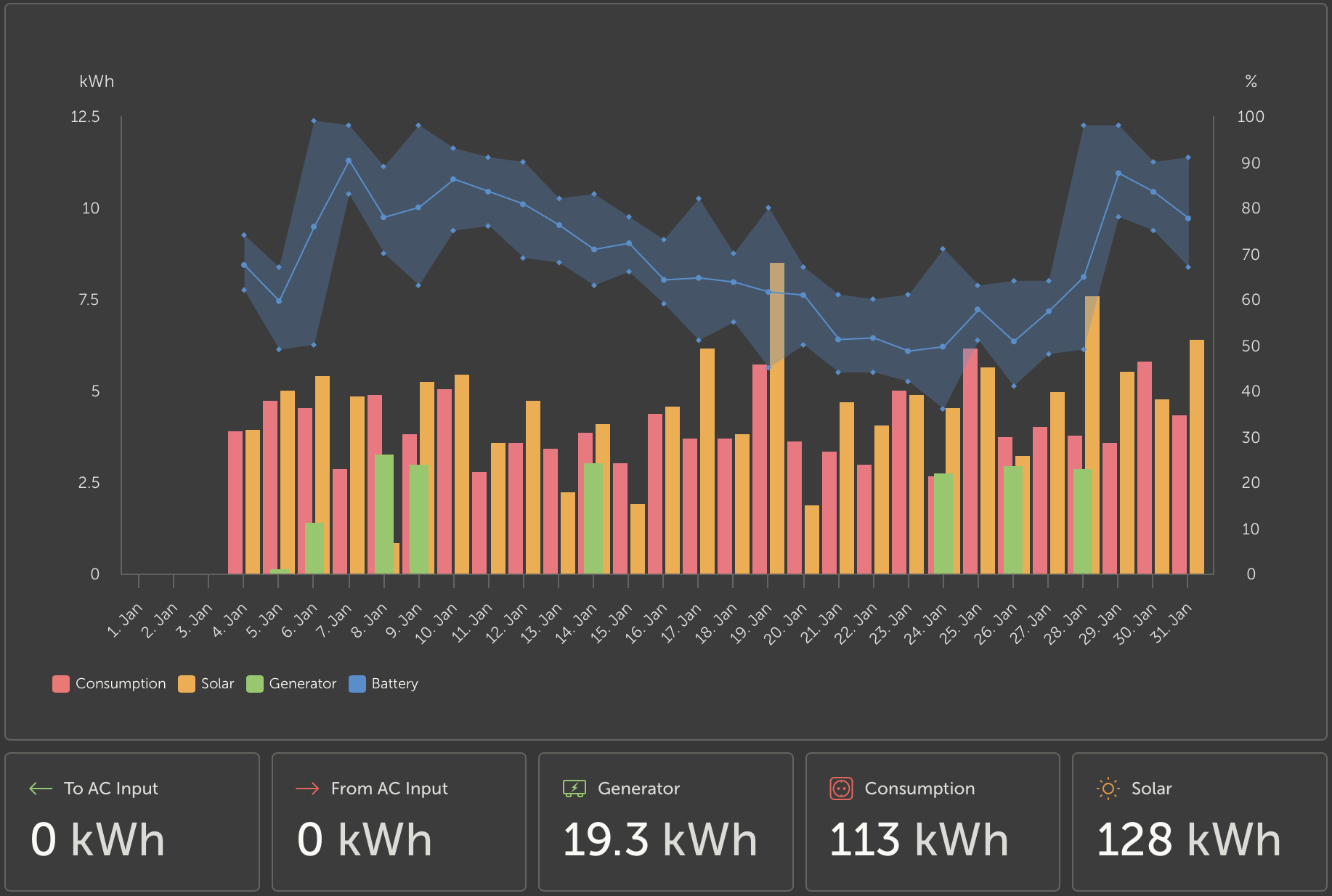
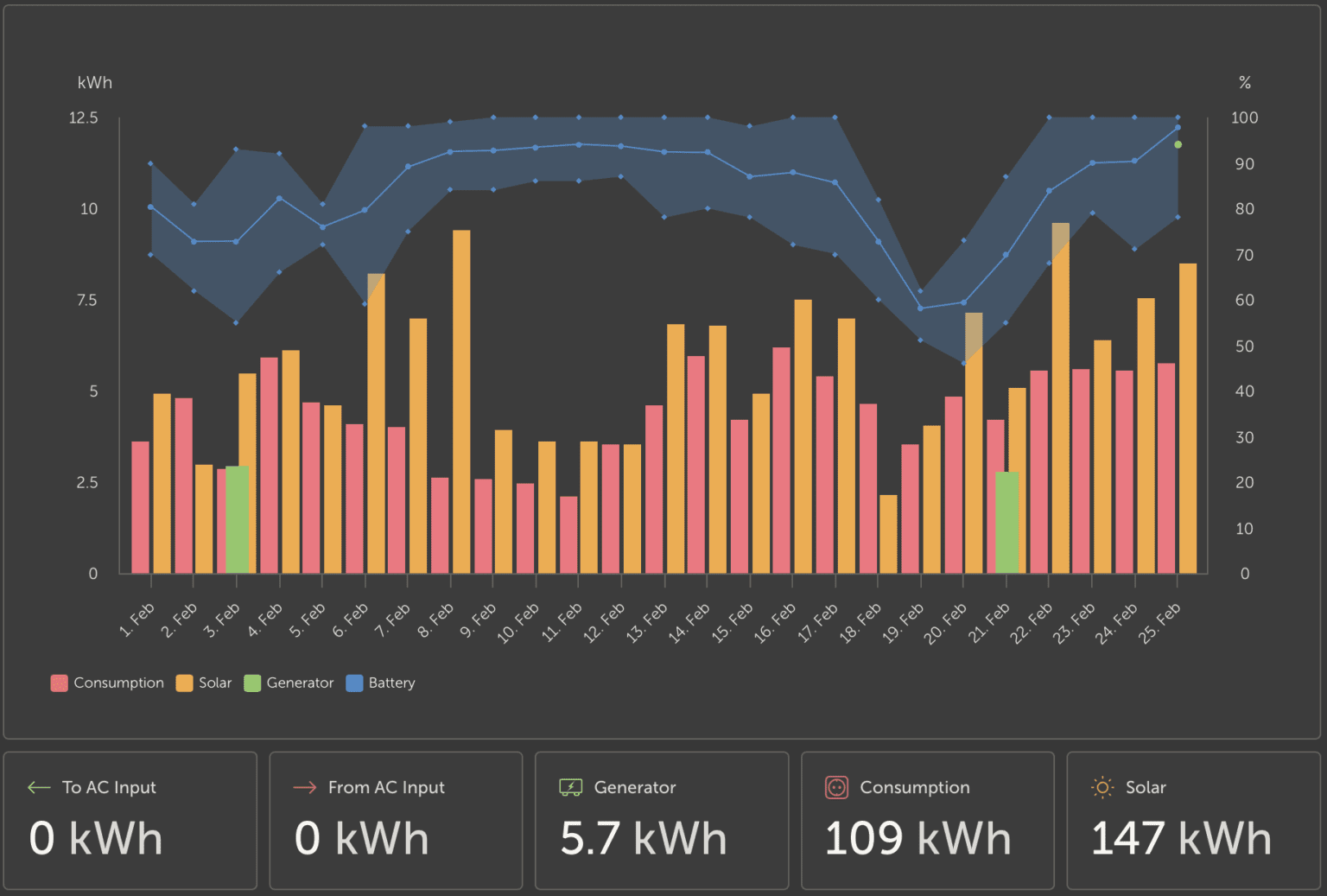
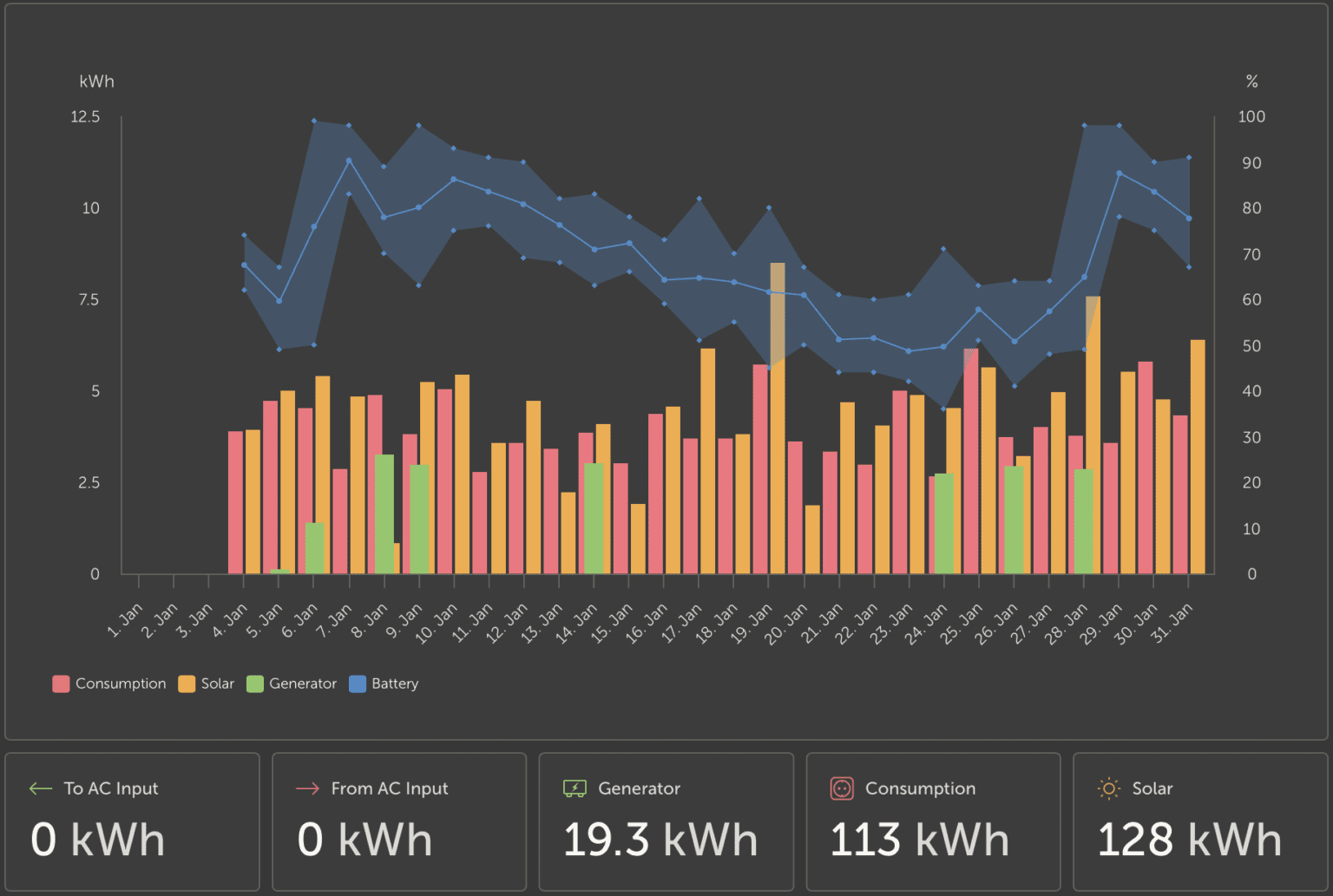
Winter solar average: 4.8 kWh/day
Some winter days exceed 10 kWh.
This winter modelling is critical for correct off-grid system sizing.
Sizing an Off-Grid Victron System
Estimating a Household’s Energy Consumption
Solar Generation Strategy for an Off-Grid Barn Conversion in Devon
Without the ability to export excess energy or rely on grid support during low production periods, the solar array must be sized and positioned with winter performance in mind — not just annual yield.For this Class Q barn conversion, the objective was simple: maximise reliable winter generation while working within the architectural and environmental constraints of the site.
Roof Constraints & Array Design
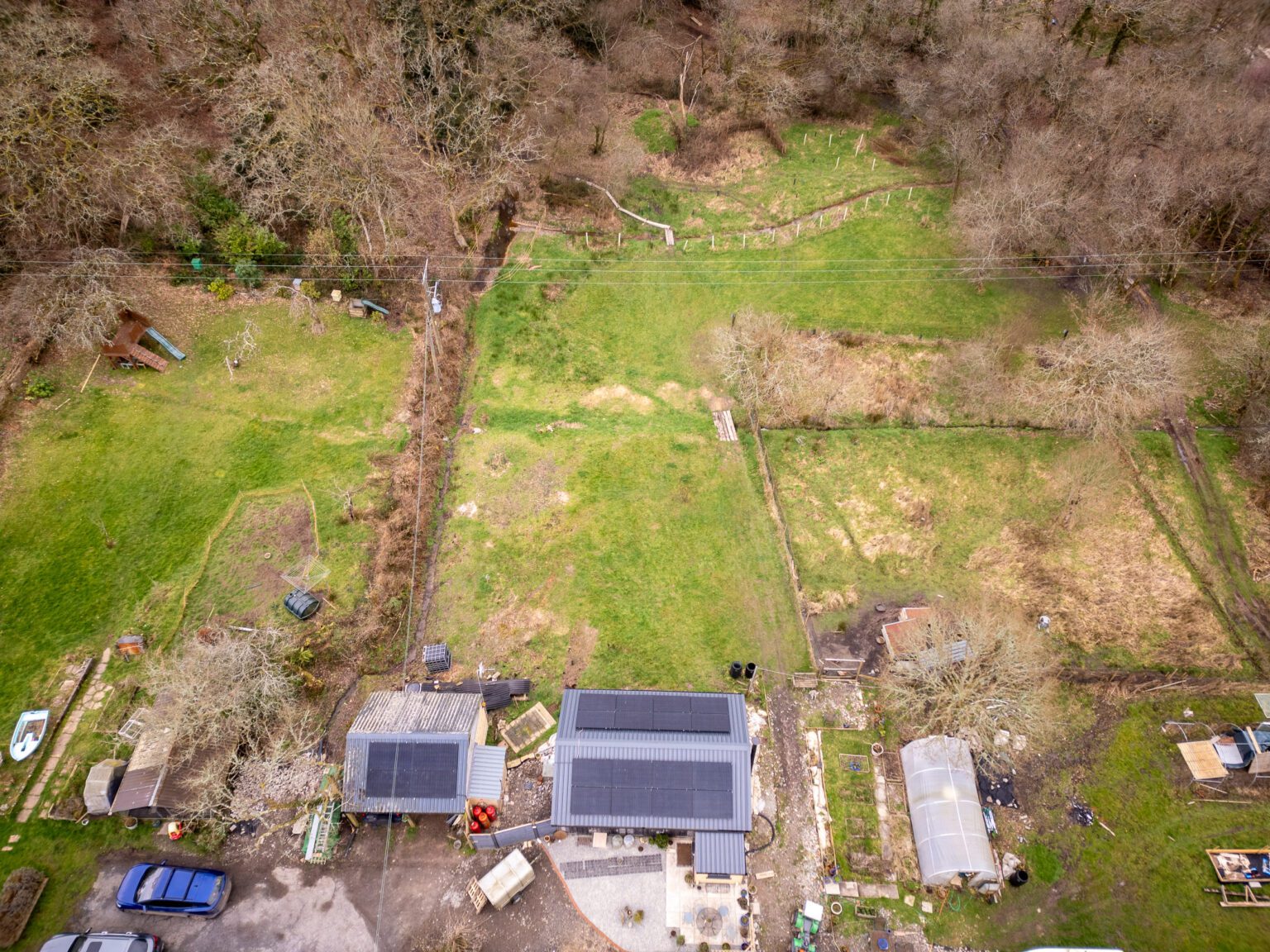
A ground-mounted array was not viable due to limited usable land and woodland shading.
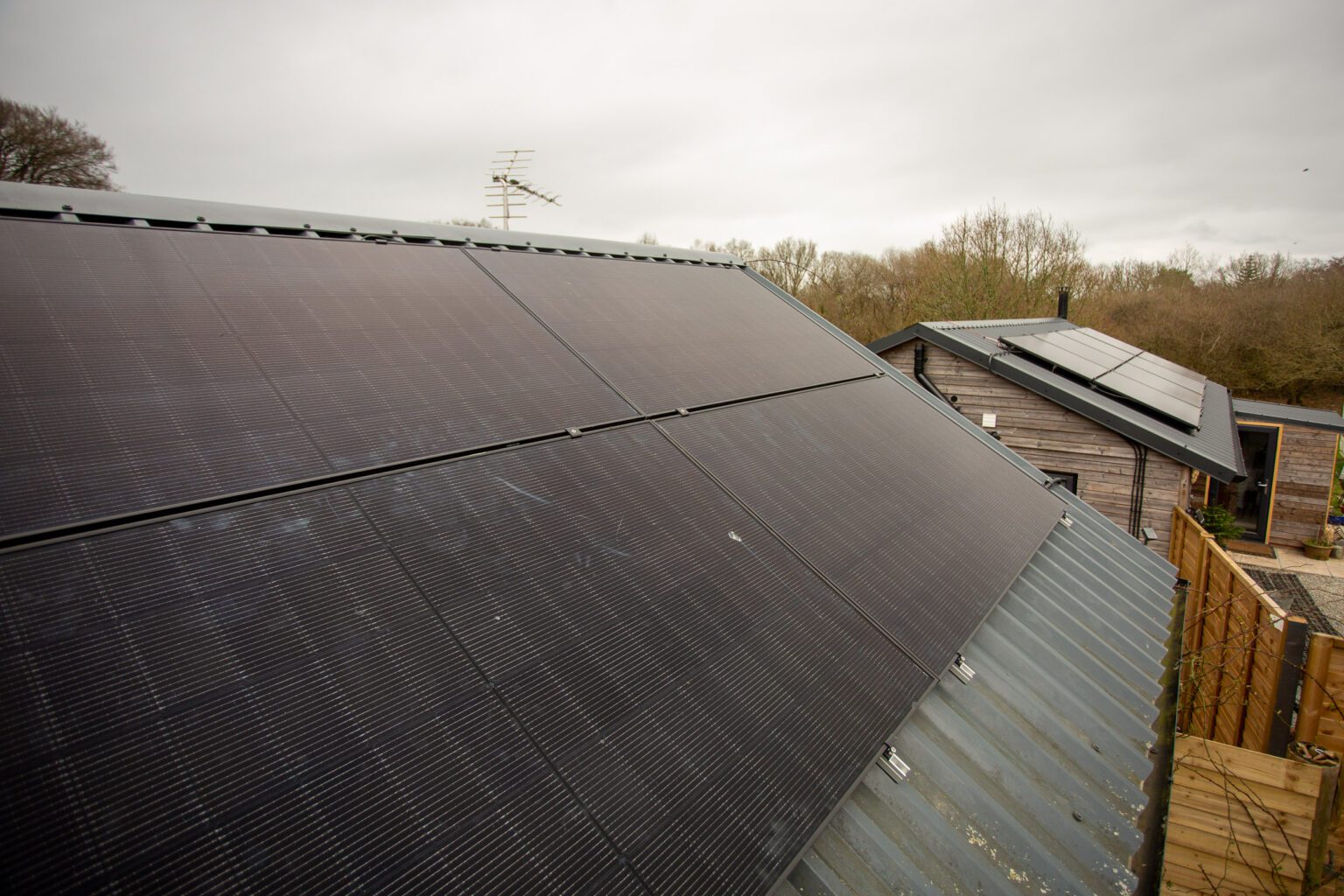
The solution was an 9.1 kW roof-mounted solar array distributed across three roof pitches:
- One south-facing pitches for strong winter performance
- One shallow 8° north-facing pitch to increase overall array capacity
- A 45° south-facing carport roof ideal for capturing low winter sun angles
Although north-facing arrays are often dismissed, the very shallow roof pitch significantly reduces orientation losses.
In this case, the additional capacity provided meaningful winter gains without compromising aesthetics.
Independent MPPT Tracking for Maximum Output
Each roof section was wired to its own MPPT tracker to prevent mismatch losses:
- Two strings connected to a Victron SmartSolar RS 450/100
- One string connected to a Victron SmartSolar 250/60
Independent Maximum Power Point Tracking (MPPT) ensures each string operates at peak efficiency regardless of orientation or irradiance differences.
For multi-pitch rural properties, this is essential to maximise real-world solar harvest.
Winter-Focused Solar Modelling
The array was modelled in OpenSolar using 3D terrain and shading analysis, including surrounding buildings and trees.
Tree management further reduced shading losses.
Off-grid systems must be designed around the lowest solar-producing months.
On this installation, winter average production is:
≈ 4.8 kWh per day (December–January average)
On brighter winter days, generation can exceed 10 kWh — allowing surplus energy to recharge the battery fully and reduce generator reliance.
Designing for Energy Independence
By oversizing the array relative to average consumption and prioritising winter yield, the system:
- Reduces annual generator runtime
- Maintains battery state of charge during low-irradiance periods
- Supports electric hot water heating from surplus solar
- Delivers true year-round off-grid reliability
In off-grid design, solar generation is not simply about peak summer output — it is about ensuring dependable winter autonomy.
This 9.1 kW configuration strikes that balance, providing resilience without unnecessary overspend.
Sizing the Off-Grid Victron System
Estimating Household Energy Consumption
Working from the maximum array size we could fit (9.1 kWp), the goal was to model the estimated energy usage of the household, including the water usage and the amount of power required to heat the 150 litre tank.
How we calculate;
Hot water is the biggest energy user, the barn conversion has a 150 litre tank, heating the water to 60 degrees. We assume a point of use temperature of 40 degrees;
•Full tank (10 → 60°C): ≈ 8.72 kWh
•Energy per litre (10 → 40°C delivered): ≈ 0.03488 kWh/L
•Typical two-person daily load (135 L): ≈ 4.71 kWh/day
•Range: ~3.1 kWh/day (low) → ~6.1 kWh/day (high)
| Load | High (kWh/day) | Low (kWh/day) |
|---|---|---|
| Towel radiator | 1.6 | 1.1 |
| Fridge/freezer | 0.55 | 0.55 |
| Dishwasher | 0.9 | 0.9 |
| Electric oven | 1.1 | 1.1 |
| Hot water (immersion) | 6.1 | 3.1 |
| LED lighting | 0.35 | 0.2 |
| Background loads | 1.0 | 0.5 |
| Total | 11.6 | 7.6 |
Off-grid Battery Sizing
With:
- Winter solar average: 4.8 kWh/day
- Expected consumption (low scenario): 7.6 kWh/day
There is a shortfall of:
2.8 kWh/day during winter
A 16.1 kWh LiFePO₄ battery was selected.
After usable capacity and system efficiency:
~13.8 kWh usable capacity
This provides:
~5 days of autonomy under typical winter conditions
Which dramatically reduces generator frequency and increases system resilience during prolonged low-irradiance periods.
Hot Water Heating and LPG Generator
Smart Hot Water Diversion
Hot water accounts for over 50% of electrical load in many off-grid homes.
Using Victron ESS logic:
- Immersion activates at 95% battery SOC
- Turns off at 75% SOC
- Uses a maximum of ~3 kWh per cycle
This ensures:
- Excess solar is captured rather than clipped
- Generator runtime is minimised
- Hot water effectively becomes a controllable thermal battery
Generator Usage & LPG Costs
Winter shortfall calculation:
2.8 kWh/day × 90 days ≈ 252 kWh/year
Generator efficiency: ~30%
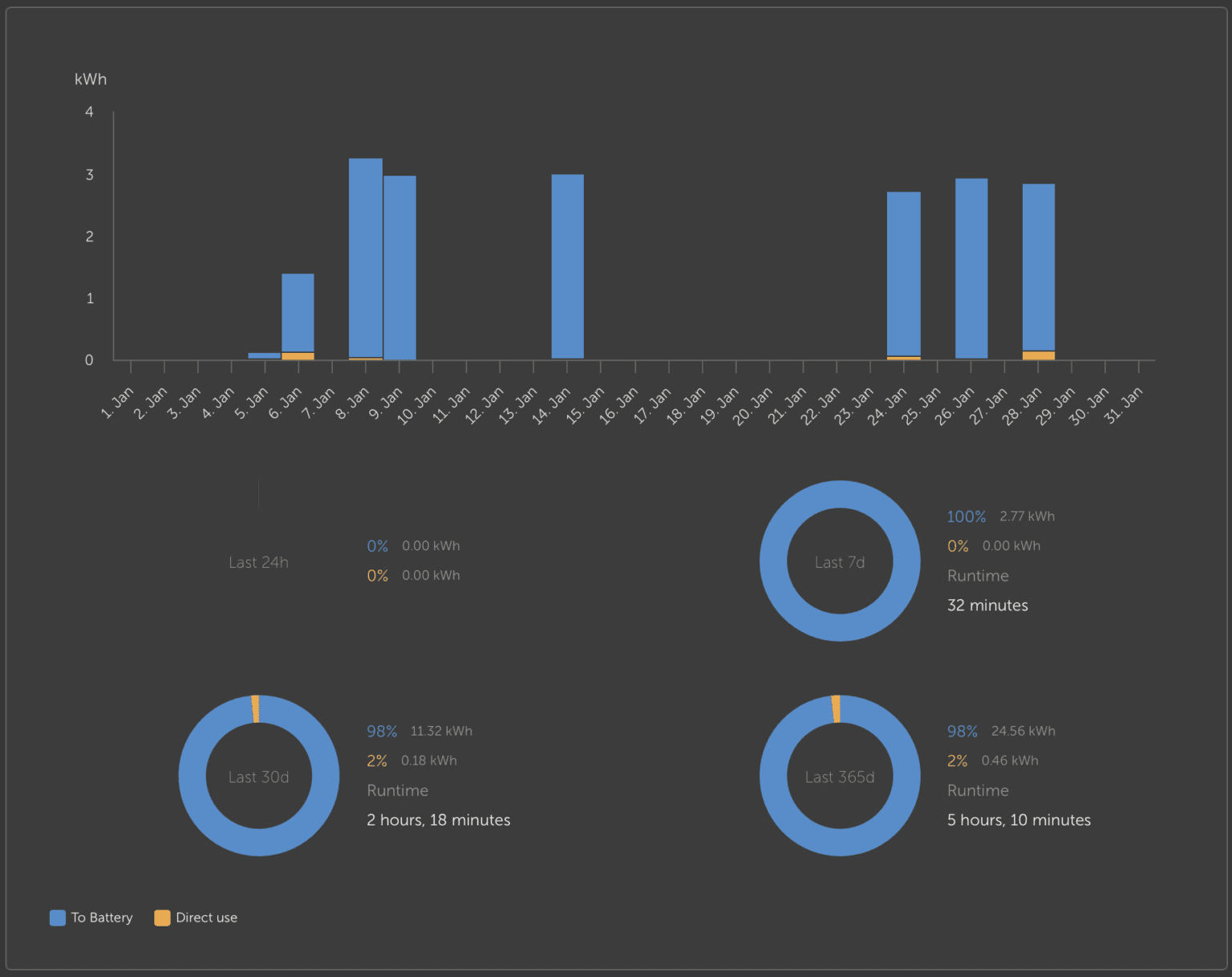
Required LPG: ≈ 64 kg/year
At £80 per 90 kg cylinder: (pricing as of Winter 2025)
~£57/year in LPG fuel
Estimated runtime:
~46 hours/year at ~5.5 kW load
Maintenance:
~£40 per 200 hours
Overall generator use is minimal, controlled, and reserved primarily for extended winter low-solar events.
Cost Comparison: Off-Grid vs Grid Connection
✔ Payback achieved in Year 10
20-Year Cost Comparison: Grid Connected vs Off-Grid
| Year | If Grid Connected | Off-Grid Annual Cost | Annual Saving | Cumulative Saving |
|---|---|---|---|---|
| 1 | £6,000.00 | £16,500.00 | £(10,500.00) | £(10,500.00) |
| 2 | £1,161.84 | £103.00 | £1,058.84 | £(9,441.16) |
| 3 | £1,196.70 | £106.09 | £1,090.61 | £(8,350.55) |
| 4 | £1,232.60 | £109.27 | £1,123.32 | £(7,227.23) |
| 5 | £1,269.57 | £112.55 | £1,157.02 | £(6,070.21) |
| 6 | £1,307.66 | £115.93 | £1,191.73 | £(4,878.47) |
| 7 | £1,346.89 | £119.41 | £1,227.49 | £(3,650.99) |
| 8 | £1,387.30 | £122.99 | £1,264.31 | £(2,386.68) |
| 9 | £1,428.92 | £126.68 | £1,302.24 | £(1,084.44) |
| 10 ⭐ | £1,471.78 | £130.48 | £1,341.31 | £256.87 (Breakeven) |
| 11 | £1,515.94 | £134.39 | £1,381.55 | £1,638.41 |
| 12 | £1,561.42 | £138.42 | £1,422.99 | £3,061.41 |
| 13 | £1,608.26 | £142.58 | £1,465.68 | £4,527.09 |
| 14 | £1,656.51 | £146.85 | £1,509.65 | £6,036.74 |
| 15 | £1,706.20 | £151.26 | £1,554.94 | £7,591.68 |
| 16 | £1,757.39 | £155.80 | £1,601.59 | £9,193.27 |
| 17 | £1,810.11 | £160.47 | £1,649.64 | £10,842.91 |
| 18 | £1,864.41 | £165.28 | £1,699.13 | £12,542.04 |
| 19 | £1,920.34 | £170.24 | £1,750.10 | £14,292.14 |
| 20 | £1,977.95 | £175.35 | £1,802.60 | £16,094.74 |
| Total | £35,181.78 | £19,087.04 | £16,094.74 | £32,487.58 |
Breakeven occurs during Year 10, after which the off-grid system delivers sustained annual savings.
A Grid Connection
Grid Connection Fee
£6000
Annual Electricity Bill (if grid-connected)
£1162
Based on an annual usage of 3504 kWh, at 28p kWh, with a 40p per day standing charge.
Total after 20 years:
£35,182
with 3% inflation each year.
Off-Grid
System Price
£16,500
Fully installed
LPG Gas costs
£80 a year
Generator Servicing
£23 a year
Every 200 hours
Total after 20 years:
£19,087
with 3% inflation each year.
Savings
Over the life of the system:
£32,488
(System lifespan estimated at 20 years)
Payback:
10 years
The Result
This Class Q barn conversion demonstrates that:
– A well-designed off-grid solar system can fully power a modern rural home. –
The system now delivers quiet, reliable, self-sufficient power — without monthly electricity bills or standing charges.
– Smart battery sizing and Victron ESS logic dramatically reduce generator use.-
– Annual generator costs are minimal (~£57). –
– Avoiding a grid connection can be financially sensible when connection fees are high. –
– Long-term savings exceed £16,000 over 20 years. –
– Energy independence is achievable — even during a Devon winter. –
Interested?
If you’re considering a renewable energy upgrade for a rural or off-grid property in Devon, or would like to discuss a similar system design, feel free to get in touch with Offgrid Western.
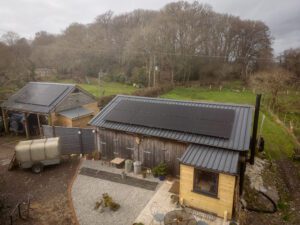

Off-Grid Class Q Barn Conversion – Solar & Battery System Case Study
Off-grid Class Q barn conversion in Devon powered by solar PV, battery storage and modern heating. A real-world renewable energy case study.